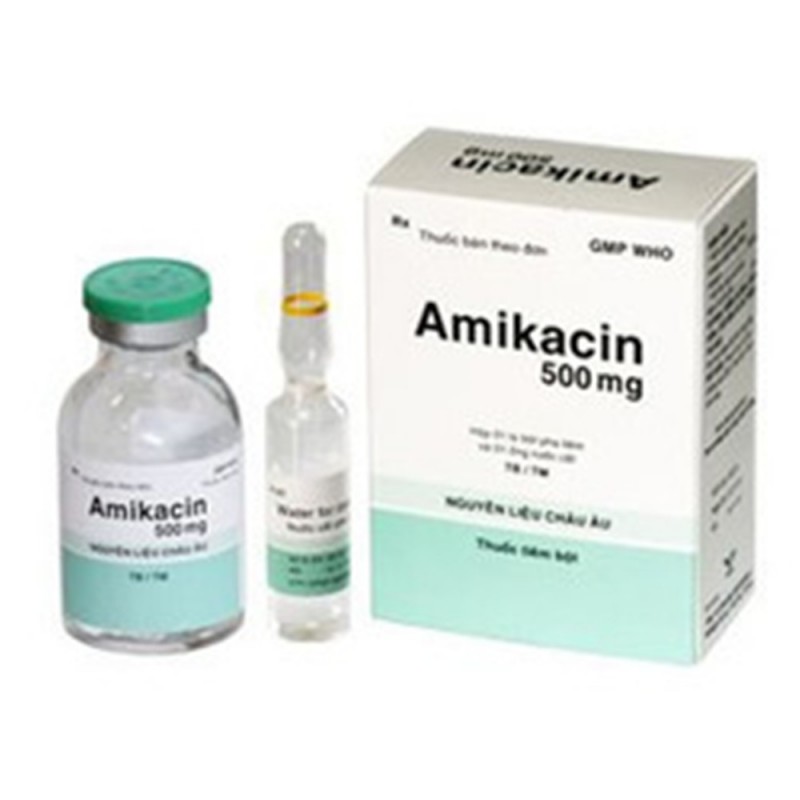
It is an antibiotic used for a number of bacterial infections. This includes joint infections, intraabdominal infections, meningitis, pneumonia, sepsis, and urinary tract infections.
Amikacin
Amikacin, Amicacin, Amikacine, Amikacina
Acil, Acmacin, Alfakim, Amexel, Amibiotic, Amicin, Amidol, Amikacin, Amikamac, Amikater, Amikavel, Amilab, Amimac, Amimax, Aminocin, Amiron
(2S)-4-amino-N-[(1R,2S,3S,4R,5S)-5-amino-2-{[(2S,3R,4S,5S,6R)-4-amino-3,5-dihydroxy-6-(hydroxymethyl)oxan-2-yl]oxy}-4-{[(2R,3R,4S,5S,6R)-6-(aminomethyl)-3,4,5-trihydroxyoxan-2-yl]oxy}-3-hydroxycyclohexyl]-2-hydroxybutanami
Amikacin is an aminoglycoside antibiotic. Aminoglycosides are useful primarily in infections involving Gram-negative bacteria (Acinetobacter, Pseudomonas and Enterobacter) and aerobic bacteria work by binding to the bacterial 30S ribosomal subunit, causing misreading of t-RNA. These are mostly ineffective against anaerobic bacteria, fungi and viruses.
15 mg/kg/day intramuscular injection
Bacterial infections
Acute muscular paralysis and apnea, hearing loss and loss of balance, induce auditory, vestibular, and renal toxicity and neuromuscular blockade.
Amphotericin B may lead to increased nephrotoxicity and reduced clearance of amikacin when used together. Enhanced neuromuscular blockade with neuromuscular blocking drugs. Increased nephrotoxic or ototoxic effects with other nephrotoxic or ototoxic drugs.
Contraindicated during Pregnancy and lactation, peforated ear drums, myasthenia gravis, hypersensitivity.
Store at 15-30°C.
585.6025
C22H43N5O13
37517-28-5
Discontinue if signs of ototoxicity, neurotoxicity or hypersensitivity occurs.
Monitor renal function before and during treatment.