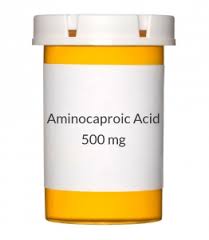
Aminocaproic acid is a derivative and analogue of the amino acid lysine, which makes it an effective inhibitor for enzymes that bind that particular residue. More
Aminocaproic acid is a derivative and analogue of the amino acid lysine, which makes it an effective inhibitor for enzymes that bind that particular residue.
Aminocaproic acid
6-aminohexanoic acid, 6-Aminocaproic acid, Aminocaproic acid, Amicar
Hamostat, Amocap, Hemocid
6-aminohexanoic acid
It is a derivative of the amino acid lysine. Aminocaproic acid has antifibrinolytic action. The fibrinolysis-inhibitory effects of aminocaproic acid appear to be exerted principally via plasminogen activators inhibition and to a lesser degree through antiplasmin activity. It may be a possible prophylactic for vascular disease, as it may prevent formation of lipoprotein (a), a risk factor for vascular disease.
30g/24 hours (Maximum)
Used to stop excessive bleeding (excessive postoperative bleeding)
Bradycardia, Prurities, hypotension, peripheral ischemia, thrombosis, Rash, Dizziness, headache, delirium, hallucinations, confusion, intracranial hypertension, stroke, Watery eyes, and syncope.
Caution when used during pregnancy, bleeding due to disseminated intravascular coagulation. Rapid IV administration.
Intravenous: Store at 15-30°C
131.175 g/mol
C6H13NO2
60-32-2
Not used in treatment of hematuria of upper UT origin, Renal or cardiac disorders, neonates.