img

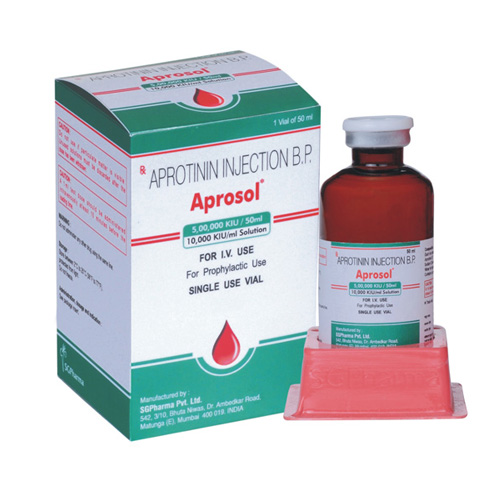
Aprotinin

The drug aprotinin, is the small protein bovine pancreatic trypsin inhibitor, an antifibrinolytic molecule that inhibits trypsin and related proteolytic enzymes. More

Sharing is caring, show love and share the thread with your friends.

Description

The drug aprotinin, is the small protein bovine pancreatic trypsin inhibitor, an antifibrinolytic molecule that inhibits trypsin and related proteolytic enzymes.

Generic Name

Aprotinin

Chemical names

Aprotinin, BC224225

Brand names

Aprogen, Apronin, Aprostat, Aprotec, Aprotin, Haemaprot, Haemoprot, Kallistat, Reliseal, Tisseel, Aprosol

IUPAC name

Pharmacokinetics

  • Absorption: Intravenous (100% bioavailability)
  • Metabolism: Aprotinin is slowly degraded by lysosomal enzymes.
  • Excretion: Urine

Actions

Aprotinin inhibits several serine proteases, specifically trypsin, chymotrypsin and kallikrein at 300,000 IU/ml and plasmin at a concentration of about 125,000 IU/ml. Its action on kallikrein leads to the inhibition of the formation of factor XIIa. As a result, both the intrinsic pathway of fibrinolysis and coagulation are inhibited. 

Dosage/Dosage form

  • Test dose of 10,000 KIU at least 10 minutes before starting treatment
  • (Max rate: 100,000 KIU/minute) 500,000-1,000,000 KIU, given by slow injection or infusion. Doses to be given via central venous line. 

Therapeutic uses

In open heart surgery, haemorrhage

Adverse effects/Side effects

Hypersensitivity, fever, nausea, GI disturbances, skin rashes, pseudo-allergic reactions, eruptions, pallor or cyanosis, tachycardia and anaphylactic shock.

Interaction

  • Risk of apnoea when used with neuromuscular blockers.
  • May reduce hypotensive action of captopril and enalapril.
  • Risk of fatal thrombotic complications when used with tretinoin.

Contraindications

Caution when used during pregnancy and lactation, Hypersensitivity

Storage

Store at 2-25°C

Information

Molecular weight

6511.439 Dalton

Molecular formula

C284H432N84O79S7

CAS number

9087-70-1

Precautions

  • Neonates and children. 
  • Test dose should be administered to all patients at least 10 minutes before loading dose to assess for risk of hypersensitvity.
  • Renal impairment. 
  • Greater risk of anaphylactic reactions upon re-exposure within 12 mth of previous use.
  • Pregnancy, lactation.