Atropine ophthalmic
Tropine tropate, Atropine, DI-Hyoscyamine, Atropen, DI-Tropyltropate
Atropine-1, Isopto Atropine
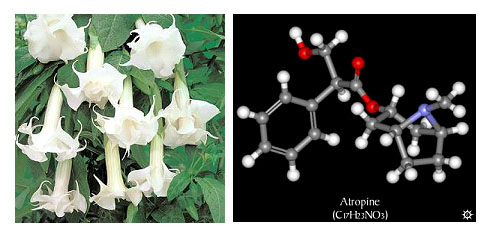
(3-endo)-8-Methyl-8-azabicyclo [3.2.1] oct-3-yl tropate
Absorption: Rapidly absorbed after oral administration.
Distribution: Readily crosses blood-brain barrier.
Metabolism: Partially metabolized by the liver
Elimination: Eliminated primarily in the urine. The t ½ is 3 h (IV). 94% of dose is eliminated through urine in 24 h.
Eye: Atropine blocks all cholinergic activity on the eye, resulting in persistent mydriasis.
Gastrointestinal (GI): Atropine can be used as an antispasmodic to reduce activity of the GI tract. Atropine and scopolamine are probably the most potent drugs available that produce this effect. Although gastric motility is reduced, hydrochloric acid production is not significantly affected. Thus, the drug is not effective in promoting healing of peptic ulcer.
Urinary system: Atropine is also employed to reduce hypermotility states of the urinary bladder. It is still occasionally used in enuresis (involuntary voiding of urine) among children, but adrenergic agonists with fewer side effects may be more effective.
Cardiovascular: Atropine produces divergent effects on the cardiovascular system, depending on the dose. At low doses, the predominant effect is a decreased cardiac rate (bradycardia). Secretions: Atropine blocks the salivary glands, producing a drying effect on the oral mucous membranes (xerostomia). The salivary glands are exquisitely sensitive to atropine. Sweat and lacrimal glands are also affected.
Max Dosage: 0.04 mg/kg body weight.
Ophthalmic: In the eye, topical atropine exerts both mydriatic and cycloplegic effects, and it permits the measurement of refractive errors without interference by the accommodative capacity of the eye.
Antispasmodic: Atropine is used as an antispasmodic agent to relax the GI tract and bladder.
Antidote for cholinergic agonists: Atropine is used for the treatment of overdoses of cholinesterase inhibitor insecticides and some types of mushroom poisoning (certain mushrooms contain cholinergic substances that block cholinesterases).
Antisecretory: The drug is sometimes used as an antisecretory agent to block secretions in the upper and lower respiratory tracts prior to surgery.
Adverse effects: Depending on the dose, atropine may cause dry mouth, blurred vision, tachycardia, and constipation.
Effects on the CNS include confusion, restlessness, hallucinations, and delirium.
Atropine and Other Interactions: This medicine can cause dizziness, drowsiness, or blurred vision. Use caution when driving or operating machinery.
Atropine and Alcohol: Consuming alcohol while taking atropine may increase risk of experiencing drowsiness or dizziness.
Atropine generally is contraindicated in patients with glaucoma, pyloric stenosis or prostatic hypertrophy, except in doses ordinarily used for pre anesthetic medication.
Intravenous: Store at 15-30°C.
Ophthalmic: Store at 15-30°C.
Parenteral: Store at 15-30°C.
289.369 g/mol
C17H23NO3
51-55-8
Reflux oesophagitis, Pregnancy