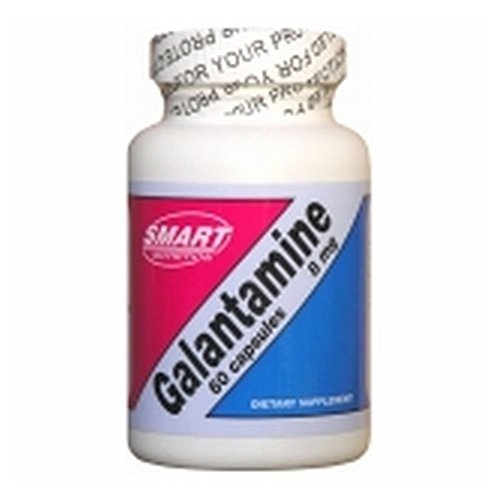
Galantamine is used for the treatment of mild to moderate Alzheimer's disease and various other memory impairments, in particular those of vascular origin. More
Galantamine is used for the treatment of mild to moderate Alzheimer's disease and various other memory impairments, in particular those of vascular origin.
Galantamine
Galanthamine; Galantamine; Lycoremine; (-)-Galanthamine
Galamer
(1S,12S,14R)-9-methoxy-4-methyl-11-oxa-4-azatetracyclo[8.6.1.0¹,¹².0?,¹?]heptadeca-6(17),7,9,15-tetraen-14-ol
Hepatic metabolism
Galantamine is a parasympathomimetic, specifically, a reversible cholinesterase inhibitor. It is indicated for the treatment of mild to moderate dementia of the Alzheimer's type. An early Pathophysiological feature of Alzheimer's disease associated with memory loss and cognitive deficits are a deficiency of acetylcholine as a result of selective loss of cholinergic neurons in the cerebral cortex, nucleus basalis, and hippocampus. Galantamine is postulated to exert its therapeutic effect by enhancing cholinergic function.
The recommended dose is 4mg every 12 hours PO.
For the treatment of mild to moderate dementia of the Alzheimer's type.
Anuria, tarry stools, chest pain, bradycardia, malena, weakness, polydipsia, fatigue, weight loss, headache, nausea and anorexia.
Galantamine may interact with other drugs such as methscopolamine, belladonna, mepenzolate, ketoconazole, glycopyrrolate, dicyclomine, clinidium, atropine and propantheline.
Hypersensitivity.
Store at 20-25°C.
287.3535
C17H21NO3
357-70-0