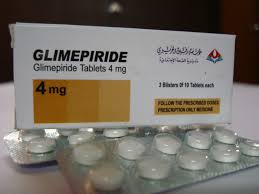
Glimepiride is an orally available medium-to-long-acting sulfonylurea antidiabetic drug. It is sometimes classified as either the first third-generation sulfonylurea, or as second-generation. More
Glimepiride is an orally available medium-to-long-acting sulfonylurea antidiabetic drug. It is sometimes classified as either the first third-generation sulfonylurea, or as second-generation.
Glimepiride
Glimepiride; Amaryl; Amarel; Glimepirida
Abepride, Adglim, Adride, Amaryl, Asoride, Astapride, Azulix, Beglim, Bepride, Betaglim, Blisto, Capril, Cgryl, Chempride, Conpride, Cupride, Daoride, Daoryl, Diaglim, Diagraph, Diapride, Diaset, Diaswich, Diazero, Dibiglim, Dipride, Elim, Emperide, Euglim, Euroglip, Flexiglim, G-Tab, G-Tab Forte, G-Tab M, Gadz, Geminor, Gepride, Gimip, Gitae, Givov, Glador, Glamor, Gleam, Gli, Glicmiz, Glicon-M, Glimcare, Glimchek, Glimcip, Glimcom
3-ethyl-4-methyl-2-oxo-N-(2-{4-[({[(1r,4r)-4-methylcyclohexyl]-C-hydroxycarbonimidoyl}amino)sulfonyl]phenyl}ethyl)-2,5-dihydro-1H-pyrrole-1-carboximidic acid
Oral absorption 100%. Hepatic metabolism.
Glimepiride, like glyburide and glipizide, is a "second-generation" sulfonylurea agents. This lowers the blood glucose by increasing the secretion of insulin from pancreas and increasing the sensitivity of peripheral tissues to insulin with diet.
The recommended dose is 1-2 mg once daily with food PO.
For concomitant use with insulin for the treatment of noninsulin-dependent (type 2) diabetes mellitus.
Vomiting, GI pain, diarrhoea; pruritus, erythema, urticaria, morbilliform, maculopapular eruptions; leukopenia, agranulocytosis, thrombocytopenia, haemolytic anaemia, aplastic anaemia and pancytopenia; hyponatraemia; changes in accommodation, blurred vision, jaundice.
Diabetic ketoacidosis with or without coma
Store at 15-30°C
490.62
C24H34N4O5S
93479-97-1