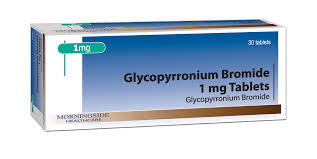
Glycopyrronium bromide is a medication of the muscarinic anticholinergic group. It does not cross the blood–brain barrier and consequently has no to few central effects. More
Glycopyrronium bromide is a medication of the muscarinic anticholinergic group. It does not cross the blood–brain barrier and consequently has no to few central effects.
Glycopyrronium bromide
Glycopyrronium bromide; Glycopyrrolate bromide; 596-51-0; Robinul
Glyco-P, Glycolate, Glycopyrrolate, Glyprolate, Licolate, Lycolate, Myo-Pyrolate, Pyrolate, Pyrolin, Vagolate
(3S)-3-{[(2R)-2-cyclopentyl-2-hydroxy-2-phenylacetyl]oxy}-1,1-dimethylpyrrolidin-1-ium
Glycopyrrolate decreases acid secretion in the stomach. Hence it can be used for treating ulcers in the stomach and small intestine, in combination with other medications. Glycopyrrolate injection serves as a preoperative antimuscarinic operation in anesthesia, that reduces tracheobronchial, salivary, and pharyngeal secretions, as well as decreases the acidity of gastric secretions blocks cardiac vagal inhibitory reflexes during intubation
NA
For use as a preoperative antimuscarinic to reduce salivary, tracheobronchial, and pharyngeal secretions, to reduce the volume and free acidity of gastric secretions and to block cardiac vagal inhibitory reflexes during induction of anesthesia and intubation. Also used to treat chronic obstructive pulmonary disease (COPD).
Xerostomia; loss of taste, nausea, vomiting, constipation, reduced sweating; urinary hesitancy and retention; blurred vision; cycloplegia; increased ocular tension; tachycardia; palpitation; headache, anxiety, bloated feeling, impotence, skin reactions.
Store at 20-25°C.
318.436
C19H28NO3
740028-90-4
Pregnancy, lactation. CV disease, hyperthyroidism, hepatic or renal impairment. Enlarged prostate, diarrhoea, fever. May cause ileus or megacolon in patients with ulcerative colitis. Children and elderly.