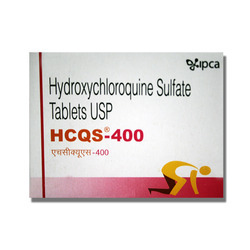
Hydroxychloroquine, sold under the brand name Plaquenil among others, is a medication used for the prevention and treatment of certain types of malaria. Specifically it is used for chloroquine sensitive malaria. More
Hydroxychloroquine, sold under the brand name Plaquenil among others, is a medication used for the prevention and treatment of certain types of malaria. Specifically it is used for chloroquine sensitive malaria.
Hydroxychloroquine
Hydroxychloroquine; Plaquenil; Oxichloroquine; Oxychlorochin; Oxychloroquine
Arthoquin, Hcqs, Hqtor, Hydrocad, Hydroquin, Mcqs, Oxcq, Oxy-Q, Rhq, Winflam, Zy-Q
2-({4-[(7-chloroquinolin-4-yl)amino]pentyl}(ethyl)amino)ethan-1-ol
Oral absorption.
Hydroxychloroquine possesses antimalarial properties and also exerts a beneficial effect in lupus erythematosus (chronic discoid or systemic) and acute or chronic rheumatoid arthritis. The precise mechanism of action is not known.
400mg/day for 4 -6 weeks. For maintenance: 200mg/day per oral.
For the suppressive treatment and treatment of acute attacks of malaria due to Plasmodium vivax, P. malariae, P. ovale, and susceptible strains of P. falciparum. It is also indicated for the treatment of discoid and systemic lupus erythematosus, and rheumatoid arthritis.
Retinopathy, photosensitivity, hair loss, tinnitus, leucopenia, myopathy (long-term therapy), GI upsets, psychosis, seizures and rarely aplastic anaemia, hepatitis, hypokalaemia, dizziness, pruritus, headache, urticaria, difficulty in visual accommodation. Loss of hair, bleaching of hair pigment, bluish-black pigmentation of the mucous membranes and skin, photosensitivity, tinnitus, reduced hearing, nerve deafness, neuromyopathy, and myopathy, including cardiomyopathy.
Retinal or visual field changes, known hypersensitivity. Long-term use in children.
Store below 30°C.
335.872
C18H26ClN3O
118-42-3