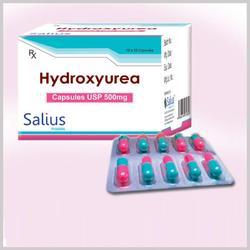
An antineoplastic agent that inhibits DNA synthesis through the inhibition of ribonucleoside diphosphate reductase. More
An antineoplastic agent that inhibits DNA synthesis through the inhibition of ribonucleoside diphosphate reductase.
Hydroxyurea or hydroxycarbamide
Hydroxyurea; Hydroxycarbamide; 127-07-1; N-Hydroxyurea; Hydrea
Cytodrox, Durea, Hondrea, Hydab, Hydran, Hydrea, Leukocel, Myelostat, Neodrea, Oxyrea, Riborea, Unidrea, Urdox
hydroxyurea
Well absorbed from the gastrointestinal tract. Hepatic metabolism.
Hydroxyurea has dose-dependent synergistic activity with cisplatin in vitro. Hydroxyurea showed activity in combination with cisplatin against the CALU-6 and LX-1 human lung xenografts In vivo, but minimal activity was seen with the NCI-H520 or NCI-H460 xenografts. Hydroxyurea was synergistic with cisplatin in the Lewis lung murine xenograft. Sequential exposure to Hydroxyurea 4 hours before cisplatin produced the greatest interaction.
NA
Metastatic, or inoperable carcinoma of the ovary, resistant chronic myelocytic leukemia, melanoma and Sickle-cell anemia.
GI disturbances, renal impairment, pulmonary oedema, dermatological reactions, headache, and dizziness. Disorientation, drowsiness, hallucinations, convulsions, alopecia, bone marrow suppression.
Severe bone-marrow suppression, severe anaemia, WBC <3000/mm3 or platelet count <100,000/mm3. Pregnancy and lactation. Hypersensitivity.
Store at 25°C
76.0547
CH4N2O2
127-07-1
Regular monitoring of uric acid concentrations, blood counts, renal and hepatic function is recommended. Prior irradiation therapy. Elderly. Avoid use of live vaccines.