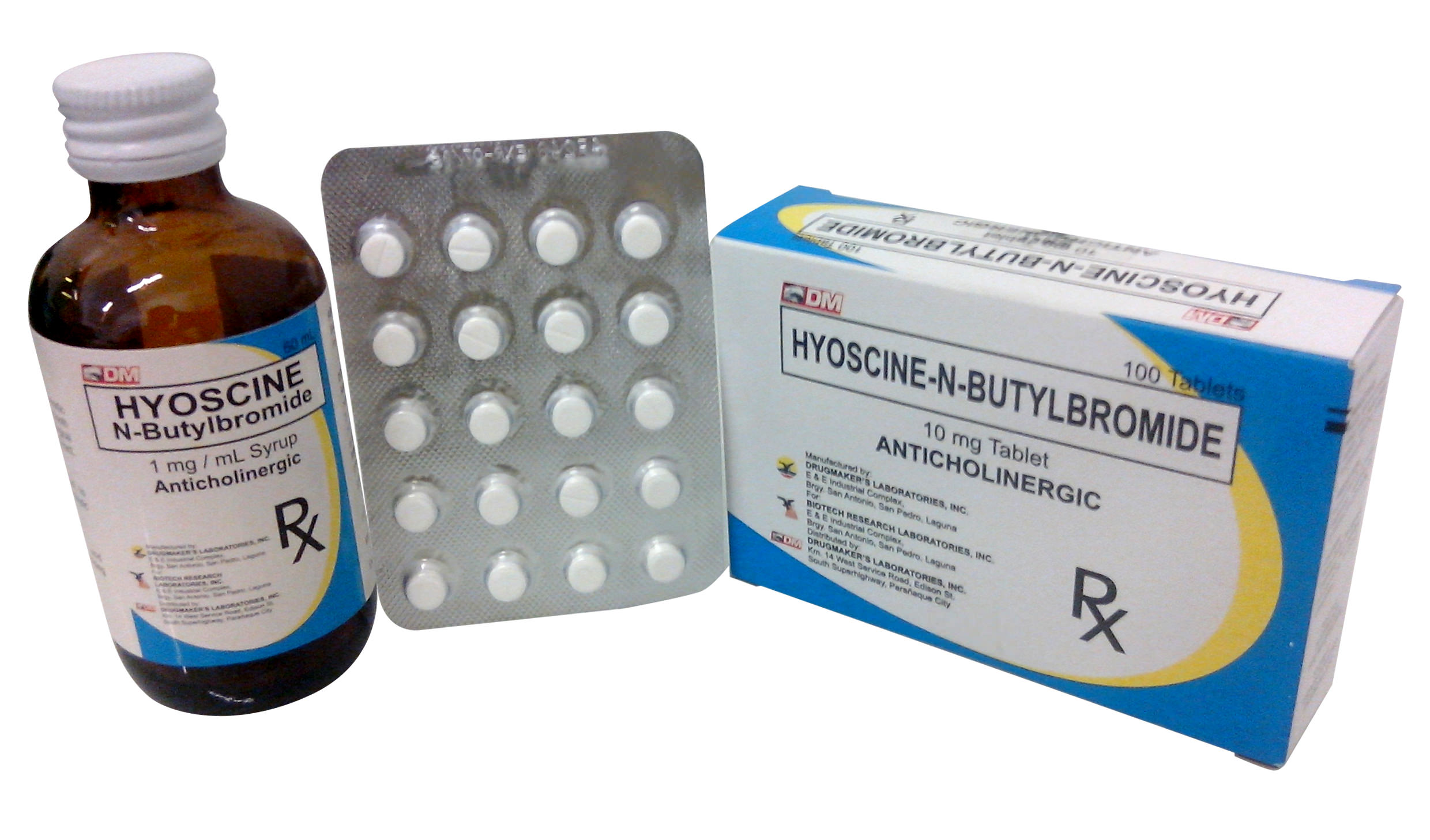
Hyoscine, also known as scopolamine, is a medication used to treat motion sickness and postoperative nausea and vomiting. It is also sometimes used before surgery to decrease saliva.
Hyoscine
Scopolamine; Hyoscine; Scopine (-)-tropate; (-)-Scopolamine; Scopoderm
Belic, Belloid, Biscotas, Buscopan, Buscopan Plus, Buscopan Supp, Dolokind SPAS, Hyospan, Hyospas, Hyoswift, Hyscopan, SMS-H, Xspas
(1R,2R,4S,5S,7R)-9-butyl-7-{[(2S)-3-hydroxy-2-phenylpropanoyl]oxy}-9-methyl-3-oxa-9-azatricyclo[3.3.1.0²,?]nonan-9-ium bromide
NA
Hyoscine is a muscarinic antagonist which acts to prevent acetylcholine-stimulated contraction of smooth muscle in the gastrointestinal tract
Used to treat abdominal cramping and pain and mydriasis.
CNS depression, coma, circulatory and respiratory failure. Flushing, postural hypotension, tachycardia, fibrillation. Rarely psychotic reactions. Dizziness, drowsiness, fatigue, headache, memory loss. Dry skin, blurred vision, erythema, increased intraocular pain, increased sensitivity to light, rash. Constipation, dysphagia, dry throat, vomiting, nausea, xerostomia. Impaired accommodation, urinary retention. Tremor, weakness. Dysuria, cycloplegia, dryness, narrow-angle glaucoma, itching, photophobia, pupil dilation. Dry nose. Decreased diaphoresis, heat intolerance. Ophthalmic: Somnolence, dermatitis, oedema, exudate, follicular conjunctivitis, increased IOP, local irritation, photophobia, vascular and respiratory congestion.
Narrow-angle glaucoma, acute haemorrhage, paralytic ileus, tachycardia due to cardiac insufficiency, myasthenia gravis.
Store at room temperature of 15-30°C (58-86°F).
440.371
C21H30BrNO4
149-64-4
Elderly, children, pregnancy, lactation. Hepatic/renal disease, urinary retention, pyloric stenosis, psychosis, prostatic hyperplasia, ulcerative colitis, seizure disorders, coronary artery disease, tachyarrhythmias, heart failure, hypertension.