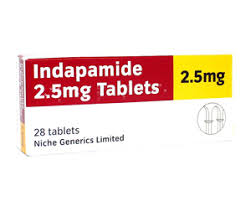
Indapamide is a thiazide-like diuretic drug marketed by Servier, generally used in the treatment of hypertension, as well as decompensated heart failure. More
Indapamide is a thiazide-like diuretic drug marketed by Servier, generally used in the treatment of hypertension, as well as decompensated heart failure.
Indapamide
Indapamide; Noranat; Veroxil; Tertensif
Atelol-D, Aten-D, Cgmide, Coversyl Plus, Diurix, Divret, Eviper-D, Fanton, In-SR, Inat, Ind-SR, Indacard, Indact, Indact-SR, Indap, Indap-AT, Indicontin, Inzu, Lorvas, Natrilix, Nebula-D, Perifer, Perigard-D, Perigard-DF
4-chloro-N-(2-methyl-2,3-dihydro-1H-indol-1-yl)-3-sulfamoylbenzamide
Oral absorption.
Indapamide is an antihypertensive and a diuretic activity because this drug contains both a lipid- soluble methylindoline moiety and a polar sulfamoyl chlorobenzamide moiety. Indapamide bears a structural similarity to the triazide diuretics which are known to decrease vascular smooth muscle reactivity. This drug probably inhibits the passage of other ions (sodium, potassium) and calcium across membranes, appears to cause vasodilation, this same effect may cause hypokalcemia in susceptible individuals. Overall, indapamide has an extra-renal antihypertensive action resulting in a decrease in vascular hyperreactivity and a reduction in total peripheral and arteriolar resistance.
1.25-2.5 mg once daily for hypertension.
Used in the treatment of hypertension, as well as decompensated cardiac failure.
Headache, dizziness, weakness, drowsiness, fatigue, agitation, nervousness, anorexia, nausea, vomiting, pain, diarrhoea, constipation, orthostatic hypotension, palpitations, hypokalaemia, hyponatraemia, metabolic alkalosis.
Anuria, severe hepatic impairment
Store at 20-25°C.
365.835
C16H16ClN3O3S
26807-65-8