It is a nitrate that dilates (widens) blood vessels, making it easier for blood to flow through them and easier for the heart to pump. More
It is a nitrate that dilates (widens) blood vessels, making it easier for blood to flow through them and easier for the heart to pump.
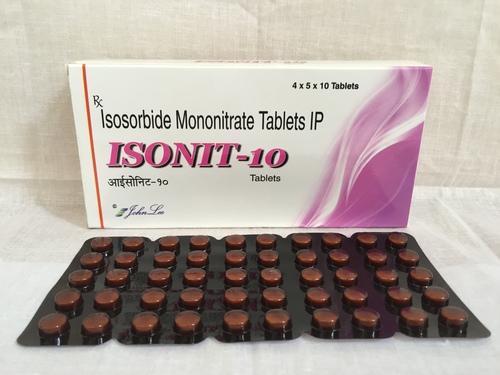
Isosorbide mononitrate
ISOSORBIDE MONONITRATE; Isosorbide 5-mononitrate; Monosorbitrate; 16051-77-7; Imdur
5-Mono, Abitrate, Abitrate-SR, Angicor, Anginex, Angitab, Angitrit, Aspitrate, Cusor, Cusor-ER, Diltrate, Ecosmin, IHD, Imdur, Imnit, Ismo, Ismo Retard, Ismorin, Isoact, Isocor-20, Isomin-20, Isonorm, Isonorm-SR, Isotop, Monet, Monicor, Monit, Monit-AS, Monn, Mono-A, Mono-Isordil, Monocontin, Monomen-20, Monopark, Monosorbitrate, Monosprin, Monotrace, Monotrate, Monotrate Od, Monotrate-SR, Nican-CR, Nitren, Nitrofix, Nitrofix-AS, Nitroprin, Nitrovas SR, Olvisol, Olvisol-SR, Solosprin, Solotrate
(3R,3aS,6S,6aR)-6-hydroxy-hexahydrofuro[3,2-b]furan-3-yl nitrate
Oral absorption and hepatic metabolism.
Isosorbide-5-mononitrate, the long-acting metabolite of isosorbide dinitrate, is used as a vasodilatory agent in the management of angina pectoris. By dilating the vessels, it lowers the blood pressure and reduces the left ventricular preload and afterload, therefore, leads to a reduction of myocardial oxygen requirement.
20 mg 2-3 times daily. Dose may range from 20-120 mg daily.
For the prevention of angina pectoris due to coronary artery disease and the treatment of acute and chronic angina pectoris, hypertension, and myocardial infarction.
Hypotension, tachycardia, flushing, headache, dizziness, palpitation, syncope, confusion. Nausea, vomiting, abdominal pain. Restlessness, weakness and vertigo. Dry mouth, chest pain, back pain, oedema, fatigue, abdominal pain, constipation, diarrhoea, dyspepsia and flatulence.
Store at 20-25°C.
191.1388
C6H9NO6
16051-77-7