img

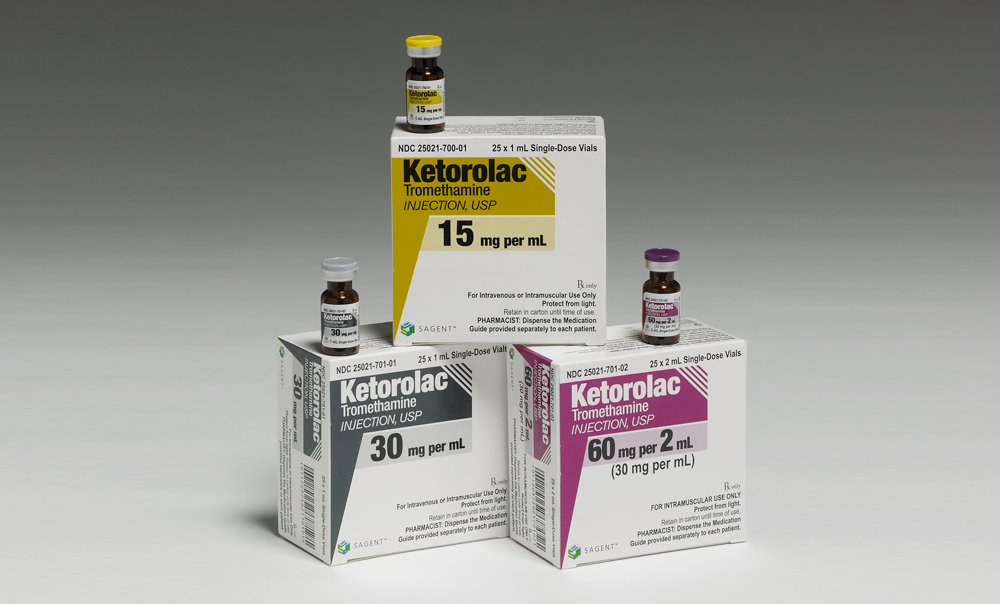
Ketorolac- intended for short-term (up to 5 days) treatment of moderately severe pain.

Ketorolac is only intended for short-term (up to 5 days) treatment of moderately severe pain. ... Ketorolac may cause an increased risk of serious and sometimes fatal stomach ulcers and bleeding. ... you are allergic to ketorolac, aspirin, or any other NSAIDs More

Sharing is caring, show love and share the thread with your friends.

Description

Ketorolac is only intended for short-term (up to 5 days) treatment of moderately severe pain. ... Ketorolac may cause an increased risk of serious and sometimes fatal stomach ulcers and bleeding. ... you are allergic to ketorolac, aspirin, or any other NSAIDs

Generic Name

Ketorolac- intended for short-term (up to 5 days) treatment of moderately severe pain.

Chemical names

Ketorolac; 5-Benzoyl-2,3-dihydro-1H-pyrrolizine-1-carboxylic acid; Ketorolaco; Ketorolacum

Brand names

Acular, Acular-LS, Alexis, Apsolox, Cadolac, Centagesic, Doloket, Doloket-LS, Doloket-O, Ethinov, Eyetrust, Ked, Kelac, Kenalfin, Ketanov, Ketanov PFS, Ketin, Ketlac, Ketlur, Ketlur Plus, Ketlur-LS, Keto-PC, Ketodrops, Ket

IUPAC name

5-benzoyl-2,3-dihydro-1H-pyrrolizine-1-carboxylic acid

Pharmacokinetics

  • Absorption: Oral
  • Distribution: 99%
  • Metabolism: Hepatic
  • Excretion: via faeces(10) and urine(90%)

Actions

Ketorolac, an anti-inflammatory agent with analgesic and antipyretic properties, is used to treat osteoarthritis and control acute pain. It is a peripherally acting analgesic. The biological activity of ketorolac tromethamine is associated with the S-form. Ketorolac tromethamine possesses no sedative or anxiolytic properties.

Dosage/Dosage form

  • Moderate to severe pain 10 mg every 4-6 hours. Max: 40 mg/day oral. 
  • 60 mg as a single dose via IM injection
  •  30 mg as a single IV dose.

Therapeutic uses

Management of severe pain.

Adverse effects/Side effects

Bleeding and perforation, rash, drowsiness, bronchospasm, psychosis, hypotension, dry mouth, fever, bradycardia, chest pain, dizziness, headache, sweating, oedema, pallor, liver function changes. GI ulcer, Anaphylaxis. Severe skin reactions. MI, stroke, GI bleeding. Transient stinging and local irritation (ophthalmic).

Interaction

  • Increased risk of renal toxicity with ACE inhibitors, diuretics. Increased adverse effects with aspirin or other NSAIDs.
  • May reduce effects of antihypertensives (e.g. ACE inhibitors or angiotensin II receptor antagonists).
  • Increased risk of GI bleeding with warfarin.
  • When used with fluoxetine, thiothixene, alprazolam hallucinations may occur.
  • Increased plasma concentrations with probenecid.
  • May increase toxicity of methotrexate and lithium. 

Contraindications

  • Contraindicated in moderate to severe renal impairment.
  • Hypersensitivity to aspirin or other NSAIDs, asthma.
  • Hypovolaemia or dehydration.
  • Do not give postoperatively to patients with high risk of haemorrhage.
  • History of peptic ulcer or coagulation disorders.
  • Nasal polyps, angioedema, bronchospasm.
  • Labour.
  • Moderate to severe renal impairment. GI bleeding, cerebrovascular bleeding.
  • As prophylactic analgesic before surgery. Pregnancy, lactation.

Storage

Store at 15-25°C

Information

Molecular weight

255.2686

Molecular formula

C15H13NO3

CAS number

74103-06-3

Precautions

  • Ketorolac tromethamine cannot be expected to substitute for corticosteroids or to treat corticosteroid insufficiency.
  • Discontinuation of corticosteroids may lead to disease exacerbation.
  •  Patients on prolonged corticosteroid therapy should have their therapy tapered slowly if a decision is made to discontinue corticosteroids.
  • Elderly, patients weighing <50 kg, heart failure, hepatic dysfunction, predisposition to reduced blood volume or renal blood flow.
  • Mild renal impairment; monitor renal function closely.