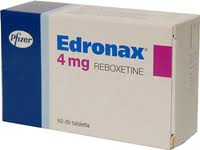
a drug of the norepinephrine reuptake inhibitor (NRI) class, marketed as an antidepressant by Pfizer for use in the treatment of major depression, although it has also been used off-label for panic disorder and attention deficit hyperactivity disorder (ADHD). More
a drug of the norepinephrine reuptake inhibitor (NRI) class, marketed as an antidepressant by Pfizer for use in the treatment of major depression, although it has also been used off-label for panic disorder and attention deficit hyperactivity disorder (ADHD).
Reboxetine
Vestra, (S,S)-reboxetine, Esreboxetine; Reboxetine
Narebox, Reboot, Rebotin, Reboxxin
(2R)-2-[(R)-(2-ethoxyphenoxy)(phenyl)methyl]morpholine
98% protein binding.
It is a selective NaRI (noradrenaline reuptake inhibitor), and an ariloxybenzyl derivative of morpholine. Prescribe to treat depression and also has been found useful in the treatment of panic disorders and narcolepsy.
4 mg bid, may increase to 10 mg daily after 3-4 weeks if necessary. Max: 12 mg daily.
For the treatment of clinical depression.
Dysuria, impotence, postural hypotension, insomnia, dizziness, increased sweating, dry mouth, constipation, dry mouth, urinary hesitancy, paraesthesia, hyponatraemia, tachycardia.
Contraindicated in pregnancy and lactation.
Store it at room temperature.
313.397
C19H23NO3
71620-89-8