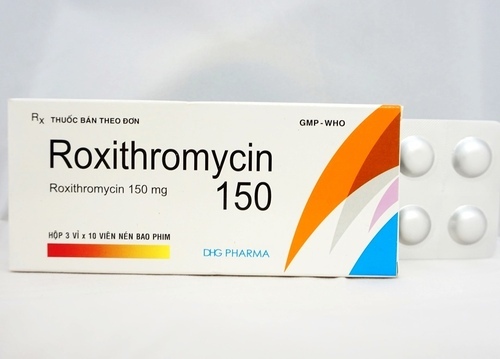
Roxithromycin is a semi-synthetic macrolide antibiotic. It is used to treat respiratory tract, urinary and soft tissue infections. More
Roxithromycin is a semi-synthetic macrolide antibiotic. It is used to treat respiratory tract, urinary and soft tissue infections.
Roxithromycin
Roxithromycin; Roxithromycine; Roxithromycinum; Roxitromicina; Rulide
Actirox, Ambroxit, Amrox, Arbid, Arbid-A, Artirox, Artirox-SP, Atrox, Aurox 150, Aurox 50Mg, Aurox-Kid, Avirox, Avirox Forte, Avirox- ST, Avirox-AM, BD- Rox, Bio-Throx, Biorox, C-Rox, Canrox, Canrox-A, Curox, Cyrox, Derox, E-Rox, Emrox, Emrox-DT, Entrox, Flanzen-RX, Geerox, Goodrox, Hirox, Hycin, Inrox, Kevrox, Kevrox-S, Kevrox-SA, Leolide, Luprex, Maclong Macrox-150, Med-Rox, Medirox, Medirox-A, Mgrox, Myrox, N-Rox, Nuroxy, Odirox, Odirox Kid
(3R,4S,5S,6R,7R,9R,11S,12R,13S,14R)-6-{[(2S,3R,4S,6R)-4-(dimethylamino)-3-hydroxy-6-methyloxan-2-yl]oxy}-14-ethyl-7,12,13-trihydroxy-4-{[(2R,4R,5S,6S)-5-hydroxy-4-methoxy-4,6-dimethyloxan-2-yl]oxy}-3,5,7,9,11,13-hexamethyl
NA
NA
The recommended dose is 150 mg twice daily or 300 mg once daily for 5-10 days per oral.
Prescribed for the treatment of urinary infections, respiratory tract, and soft tissue infections.
Nausea, vomiting, abdominal pain, diarrhoea, weakness, malaise, anorexia, constipation, dyspepsia, flatulence; hepatitis; rashes, headache, dizziness, weakness, changes in blood counts; increased liver enzyme values; eosinophilia; rarely, acute pancreatitis.
May raise serum levels of ciclosporin and digoxin. Increased risk of rhabdomyolysis when used with simvastatin.
Hypersensitivity. Porphyria
Store it at room temperature.
837.0465
C41H76N2O15
80214-83-1
Hepatic impairment. Monitor liver function. Prolonged treatment increases risk of hepatotoxicity. History of arrhythmias.