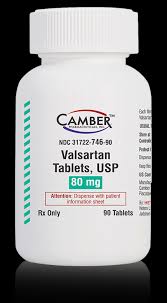
Valsartan is an angiotensin II receptor antagonist, that is selective for the type I angiotensin receptor.
Valsartan
Valsartan; Diovan; Provas; Tareg; L-Valsartan
Co-Diovan, Diovan, Nebicard-V, Starval, Valent, Valent R, Valent R-5, Valent-H, Valfect, Valfect-H, Valzaar, Valzaar-H, Valzaar-SM
(2S)-3-methyl-2-[N-({4-[2-(2H-1,2,3,4-tetrazol-5-yl)phenyl]phenyl}methyl)pentanamido]butanoic acid
Oral bioavailability 23%, Protein bound 94-97%.
Valsartan is an ARB that selectively inhibits the binding of angiotensin II to AT1, which is found in many tissues such as vascular smooth muscle and the adrenal glands. Valsartan effectively inhibits the AT1-mediated vasoconstrictive and aldosterone-secreting effects of angiotensin II and results in a decrease in vascular resistance and blood pressure. Valsartan is selective for AT1 and has virtually no affinity for AT2. Inhibition of aldosterone secretion may inhibit sodium and water reabsorption in the kidneys while decreasing potassium excretion. The primary metabolite of valsartan, valeryl 4-hydroxy valsartan, has no pharmacological activity
NA
Angioedema; dizziness; headache; dose-related orthostatic hypotension; rash; hyperkalaemia; myalgia; respiratory tract disorders; back pain; GI disturbances; fatigue; increase in BUN and serum creatinine; abdominal pain; dry cough; LFT elevations.
Hypersensitivity; severe hepatic impairment, cirrhosis or biliary obstruction; primary hyperaldosteronism. Pregnancy (2nd and 3rd trimesters) and lactation.
Store between 15-30°C (59 - 86<249>F).
435.5188
C24H29N5O3
137862-53-4
Volume depletion; renal artery stenosis; monitor serum potassium concentrations; severe CHF; renal impairment; mild to moderate hepatic impairment. Elderly.